Current Mortgage Rates in 2026: What Homebuyers Should Expect
By Michael Hubbard, Founder & editor · Published January 15, 2026 · Updated September 11, 2026 · 8 min read
Mortgage rates are the biggest lever on what a house costs over time. In 2026 I have kept our national 30-year default around 6.75% (indicative as of June 2026) because that is the number I am willing to put on the site with a date stamp. Your personal rate can land well above or below it. This guide is what I actually use when I explain what moves rates, why a headline is not a quote, and the levers — Loan Estimates, locks, float-downs, seller concessions — that improve outcomes. I update the as-of date myself. I do not forecast the Fed for a living.
What moves mortgage rates
Mortgage rates are not set by any single institution. I keep this list taped next to the default-rate field because people still email me as if I pick the number:
- The Federal Reserve's policy rate, which influences short-term borrowing costs across the economy.
- The 10-year Treasury yield, which mortgage rates tend to track closely.
- Inflation expectations — higher expected inflation generally pushes rates up.
- Investor demand for mortgage-backed securities.
- Your credit profile, loan type, occupancy, property type, and down payment.
- Lender overlays and temporary pricing adjustments on a given day.
Mid-2026 snapshot (June context)
Headline averages are a starting point. In June 2026, well-qualified borrowers with strong credit and 20% down often saw rates near or slightly below the national average, while smaller down payments or lower scores landed higher. Fifteen-year fixed loans typically priced below comparable 30-year terms. 5/1 and 7/1 ARMs often started lower than fixed, then adjust. That month I was watching inflation prints and jobs data the same way everyone else was — and reminding myself that Treasury yields can move mortgages before a Fed meeting does. When the 10-year rises, mortgage rates tend to follow within days. I stopped telling people to wait for the next FOMC as if it were a coupon.
- 30-year fixed: roughly 6.75% national average (indicative site default, originally aligned to mid-2026).
- 15-year fixed: typically priced below the 30-year average for similar profiles.
- 5/1 and 7/1 ARMs: stress-test the reset with the ARM calculator.
- FHA and VA note rates can look competitive, but MIP or funding fees change total cost; county limits still apply for FHA and for some VA partial-entitlement cases.
Worked payment sensitivity
On a $350,000 loan with a 30-year term near 6.75%, a one-percentage-point rate change typically moves principal and interest by roughly $200–$230 per month before taxes and insurance. I built the chart below from three runs of the same formula we ship. Use the mortgage calculator and nudge the rate slider — including PMI if down payment is under 20% — so you see PITI, not a vanity P&I.
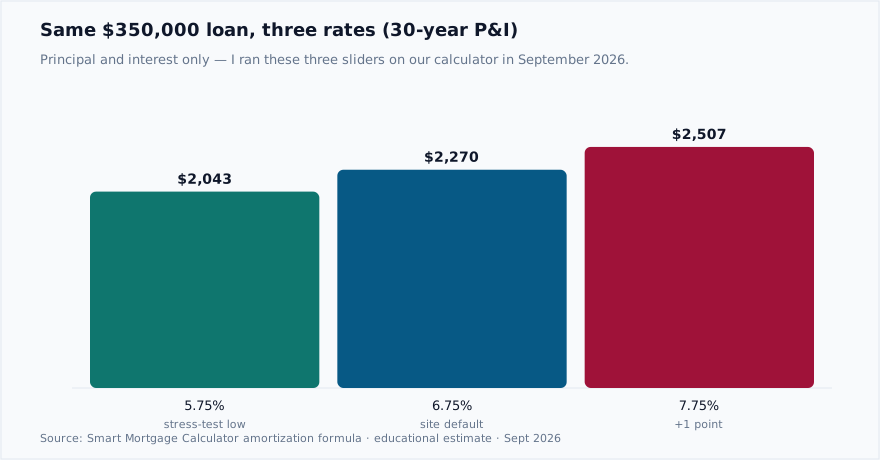
| Note rate | Monthly P&I | Vs 6.75% |
|---|---|---|
| 5.75% | $2,043 | −$227 / month |
| 6.75% (site default) | $2,270 | — |
| 7.75% | $2,507 | +$237 / month |
Why your rate differs from the headline
Advertised rates are often best-case for highly qualified borrowers. I price risk the way lenders do in the story, even if I cannot issue a lock: 760+ credit, 20% down, conforming primary residence usually beats a 640 with 5% down on the same day. Condo versus single-family, cash-out versus purchase, investment occupancy, and discount points also change the note. Pure amortization is location-agnostic. Realistic payments still need county tax and insurance. That last sentence is why I live in Georgia and still keep Texas in the examples.
Shop 3–5 Loan Estimates the same day
The fastest way I know to improve a personal rate is structured shopping, not waiting for a perfect headline:
- Request written Loan Estimates from at least three lenders — five is better if your credit or condo is quirky — on the same day with the same loan amount, lock period, and points/credits assumption.
- Multiple mortgage inquiries within a focused window (often about 45 days under current scoring models) typically count as a single rate-shopping event; verify the rule your credit file uses.
- Compare APR and the fees that survive shopping (origination, underwriting, credit, appraisal) — not just the note rate.
- Negotiate: send competing LEs to the lender you prefer and ask them to match rate or credits. Many will.
- Decide holding period: buying points makes sense only if you keep the loan past break-even; a "no-cost" loan usually prices the credits into a higher rate.
For the full playbook — including discount-point break-even, overlays, and why a single quote is expensive — see how to get the best mortgage rate.
Rate locks vs float-downs
A rate lock commits the lender to a rate (and often points) for a set period — commonly 30–60 days. Floating means I have not locked yet and could win or lose if markets move. Some lenders offer a float-down if rates drop enough after I lock. I ask in writing before I would lock: fee, market-move threshold, and whether float-down changes the lock expiration. I learned to ask about extension fees the way I learned to ask about points — after imagining a closing that slips a week.
Seller concessions and temporary buydowns
In many markets you can ask the seller to fund closing costs or a temporary rate buydown instead of (or in addition to) a price cut. Program caps differ — conventional seller concessions often allow about 3–9% depending on down payment, FHA/USDA commonly up to 6%, VA around 4% for certain closing costs. Structure concessions as a credit toward allowable costs, not an informal price cut that confuses appraisal. A 2-1 temporary buydown lowers the payment in years one and two; know who funds it and what the fully indexed payment will be. Details: down payment, closing costs, and concessions.
Fixed vs ARM in a 2026 context
A 30-year fixed loan buys payment certainty. A 5/1 or 7/1 ARM may start lower, then adjust with an index plus margin after the intro period, subject to periodic and lifetime caps. ARM usage tends to be higher in high-cost states where payment stretch is severe. I stress-test both in the ARM calculator and I wrote the recast numbers in ARM vs fixed — local taxes and insurance still apply either way.
Refinancing when rates move
If you already have a mortgage, compare current principal and interest to a new quote with the refinance calculator. Divide closing costs by monthly savings for break-even months, and watch whether a new 30-year term erases interest savings. Some states require a tangible net benefit analysis — see should you refinance in 2026.
Location still belongs in a rates conversation
A national average does not include Texas property taxes, Florida wind premiums, or California Mello-Roos. Open a state-preloaded calculator such as Texas, Florida, or California before you decide a payment is affordable. Pair this page with the affordability guide for PITI, not just the note rate.
FAQs
Should I wait for the Fed?
Mortgage rates often move on Treasury markets before or after Fed meetings. Shopping same-day Loan Estimates beats forecasting. A locked quote you can live with beats a hoped-for cut that never shows up on your file.
Is the lowest rate always best?
Not if you pay more points than your holding period recovers, or starve cash reserves. In my $300,000 one-point test, 6.75%→6.50% took about 60 months to earn back the $3,000. Sell in year three and those points are still underwater.
Do location and county matter for the rate itself?
Mostly for loan limits, taxes, insurance, and some state programs. Amortization is national; escrow items are local. Open a state-aware calculator before you decide a payment is affordable.
Why is my quote higher than the national average?
Advertised averages are often best-case: strong credit, 20% down, conforming primary residence, zero points. Condo, cash-out, investment occupancy, and low-down PMI pricing all move you off that headline.
Rates change daily. I treat any figure here as educational and I still want a licensed loan officer on the lock. Verify program rules with HUD, VA, or FHFA when limits or insurance are involved. Methodology: how we calculate.
Keep reading
How to Get the Best Mortgage Rate: Loan Estimates, Points, Locks & Overlays
I treat the first quote as a draft. Same-day Loan Estimates, a points break-even I actually charted, and overlays are how I shop a rate.
ARM vs. Fixed-Rate Mortgage: Stress-Test the Reset Before You Take the Teaser
I built the ARM calculator because teasers look like a cheat code until you recast the remaining balance at the cap.
This article is for general educational purposes only and is not financial advice. Rates and figures are indicative and may change. Consult a licensed mortgage professional about your situation. See our disclaimer.